A carport can provide valuable protection for your vehicle while making better use of the available space around your home. However, deciding where to install one is not always as straightforward as choosing an empty section of the property. The location can affect accessibility, drainage, appearance, convenience and compliance with local requirements.
Working with experienced carport builders can help you assess the property and determine where a carport can be positioned effectively. Before committing to a location, consider the following factors.
Consider Your Driveway
The driveway is often one of the most practical locations for a carport because it already provides a suitable access route for vehicles. Positioning a carport over an existing driveway can make entering and leaving the property straightforward while creating a designated covered parking area.
Consider how much room is available around the vehicle. There should be enough space to open doors comfortably and walk around the car without hitting posts or nearby structures.
If you have multiple vehicles, think about how they will move in and out of the property. A design that looks suitable on paper may become inconvenient if another vehicle regularly blocks the access route.
Think About Your Home’s Entrance
The relationship between the carport and your home’s entrance is another important consideration. A carport located reasonably close to the front, side or rear entrance can make everyday tasks easier, particularly when carrying groceries or moving items between the vehicle and house.
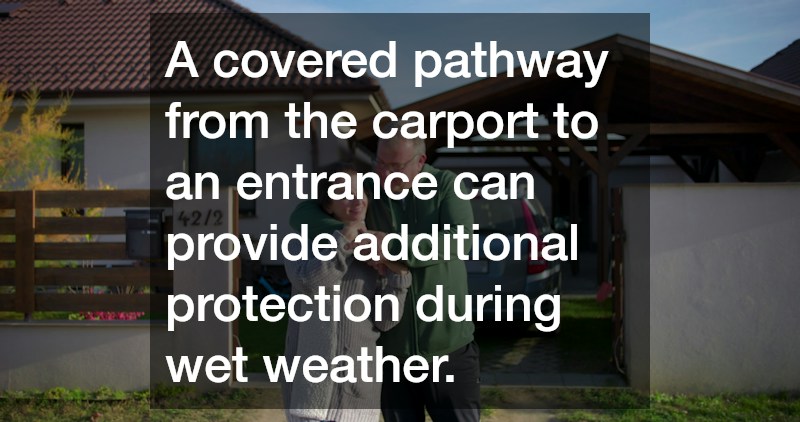
A covered pathway from the carport to an entrance can provide additional protection during wet weather. Depending on your property layout, the most convenient location may not necessarily be the most obvious one, so consider how you typically move around your property.
Look at the Property’s Layout
Before choosing a location, assess the entire property rather than focusing only on the available space immediately beside the house. Garden areas, fences, sheds, outdoor entertaining areas and existing structures can all affect where a carport can be installed.
The shape and slope of the block may also influence the design. A level area may require less preparation, while sloping ground could require additional work to create a suitable foundation and finished surface.
Experienced carport builders can assess these conditions and discuss potential solutions based on the property’s layout.
Pay Attention to Drainage
Water management should be considered before construction begins. A carport roof needs to direct rainwater appropriately, while the surrounding ground should allow water to move away from the structure.
Installing a carport in an area where water already collects could create ongoing problems. Consider existing drains, downpipes, stormwater systems and the natural slope of the property.
Good planning can help reduce water pooling and protect both the carport and surrounding areas from unnecessary moisture.
Consider Sun and Weather Exposure
One of the main reasons for installing a carport is to protect a vehicle from outdoor conditions. Therefore, consider how the proposed location interacts with sunlight, wind and rainfall.
The orientation of the carport can influence how much direct sunlight reaches the vehicle at different times of day. A suitable position may help provide shade during hotter periods while offering protection from rain and other weather conditions.
Local weather patterns should also be considered when selecting materials and designing the structure.
Check Property Boundaries and Regulations
The available space is not the only consideration when selecting a carport location. Local planning and building requirements may specify how close a structure can be to property boundaries, roads or other structures.
Depending on the project and location, approvals or permits may also be required. Easements, heritage restrictions and other property-specific considerations could affect where the structure can be built.
It is worth checking these requirements before construction begins. Carport builders with knowledge of local building requirements may also be able to help identify issues that need to be addressed during the planning stage.
Think About Future Needs
When choosing a location, consider how your property may be used in the future. You may eventually purchase another vehicle, add storage, renovate the house or change the layout of your outdoor areas.
For example, placing a carport in a location that prevents future access to a backyard or blocks a potential extension could limit your options later. Planning ahead can help ensure the structure remains useful as your needs change.
Work With Experienced Professionals
Once you have identified potential locations, discuss them with carport builders who can assess the site and explain the practical requirements. They can consider dimensions, access, materials, drainage and structural requirements before construction begins.
The right location should provide convenient vehicle access while complementing the existing property. By considering the driveway, home entrance, site conditions, drainage, weather exposure and future plans, you can make a more informed decision about where your carport should go.
With careful planning and professional guidance, your new carport can provide reliable vehicle protection without compromising the functionality or appearance of your property.